A form that fills your inbox with fake offers makes you ignore messages, and then you miss a real one. The goal of spam protection is simple: let people through, keep bots out and never make an actual customer wonder if their message arrived.
The quiet methods
A hidden field is the simplest trick. A person never sees it, a bot fills it in, and the submission is dropped. Timing checks work the same way: a form submitted in half a second was not typed by a human.
For heavier traffic, a verification step can be added, such as a simple challenge that appears only when something looks off. We choose the lightest option that works for your volume.
Layers we can use
- ✓Hidden trap field — catches basic bots with no effect on people
- ✓Timing check — flags submissions that are too fast
- ✓Content filters — rejects obvious link-stuffed messages
- ✓Verification challenge — added only if spam persists
Testing both directions
Every filter has a cost: it can block a real person. After setup we send test messages the way a customer would, including from a mobile browser, and confirm they arrive. We also check the spam side by watching what slips through in the first weeks.
If a real customer ever tells you their message vanished, tell us. We can adjust the rules and add a visible fallback, such as a plain contact address in the confirmation text. Keep a short log for the first month: how many real messages arrived and how many junk ones. That small record tells us whether to tighten the rules or loosen them.
What to check on your side
- ✓Which inbox receives forms — and that it is monitored
- ✓Your junk folder — see whether form emails land there
- ✓Sender settings — so your domain’s email passes checks
- ✓Any past spam samples — they help us tune filters
What to expect, honestly
- ✓No total spam elimination — some junk will still slip through
- ✓No filter is perfect — strict rules can block real people
- ✓No mailbox management — your email provider handles inboxes
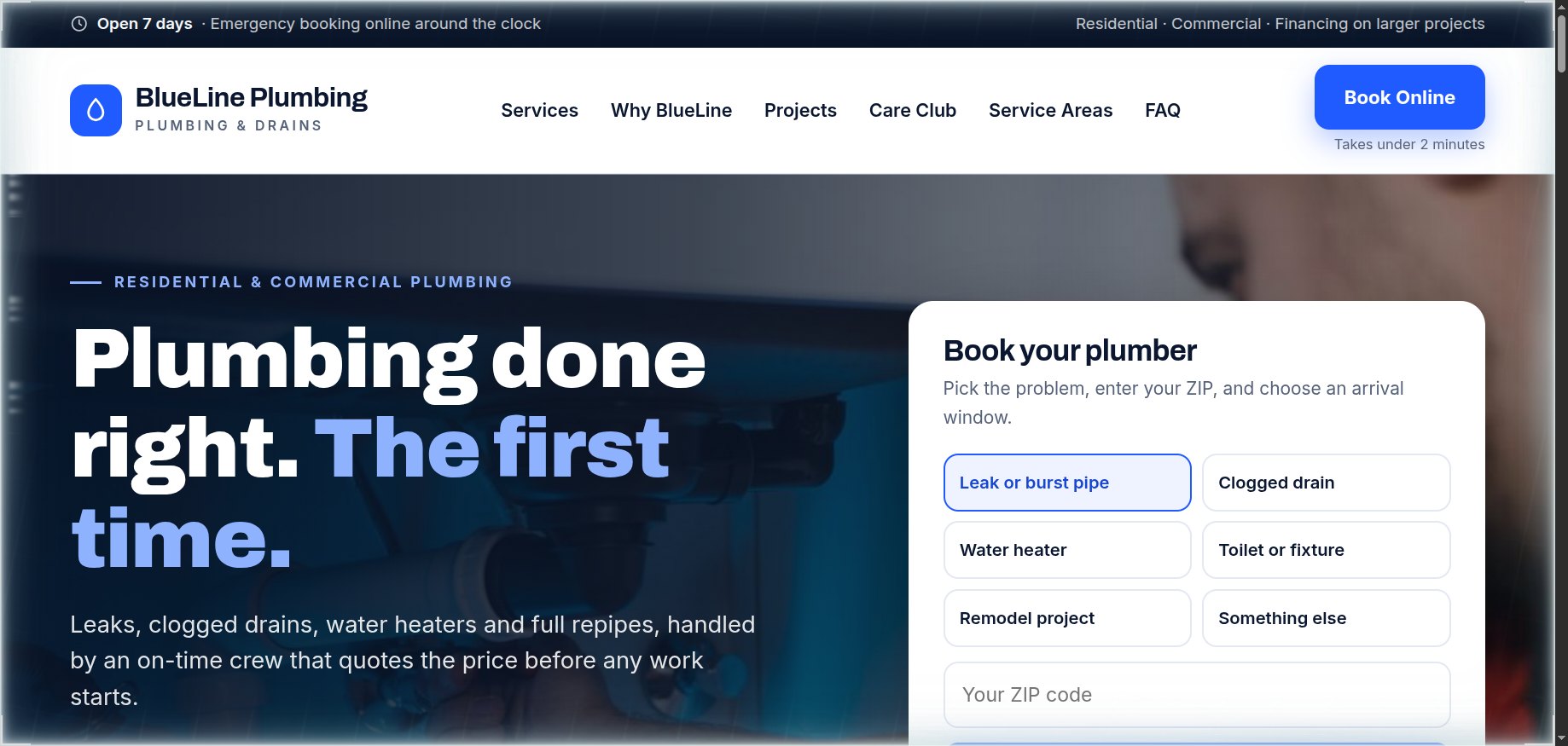
One example of what your site could look like
This is one sample we designed. Yours is built around your business, your photos and your words, and we have more examples if you want to compare directions.

What it costs
Websites are priced one-time by size, plus Website Care at $30/month for hosting, HTTPS, backups, weekly checks and A/B testing. Every package includes a consultation, mobile-friendly design, copy we write for you, a contact form, essential search setup and 10 revision rounds. Monthly SEO is an optional add-on when you are ready for it.
Optional add-ons, billed separately
The prices above are for your website. These two are separate monthly products you can add now or later. Neither is part of the website price.
Monthly SEO, from $50/month: new pages published on your site every month. See Monthly SEO →
Business Spotlight, from $30/month: articles about your business, labeled as paid, published on The Company Chronicle. See Business Spotlight →
How it works
1. Consultation
We learn your services, customers and goals, in English or Spanish.
2. We write and design
We draft the words and build the site around your business.
3. 10 revision rounds
You review and request changes until it is right.
4. Launch and care
We launch, then Website Care keeps it hosted, backed up, checked weekly and A/B tested.
Keep reading
Quote request forms · Contact form not working · Send leads to your CRM